Updated on December 25, 2025, 01:16PM (AST)

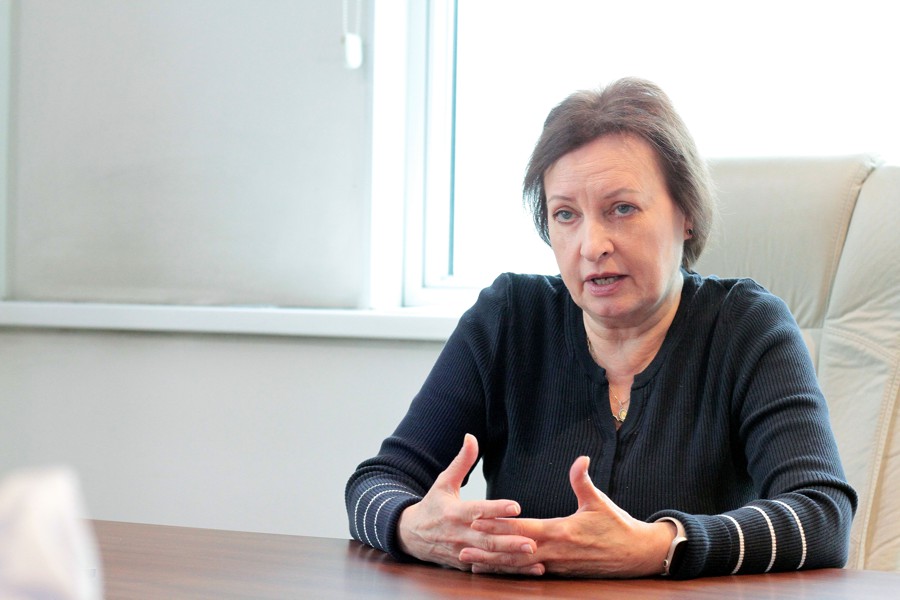
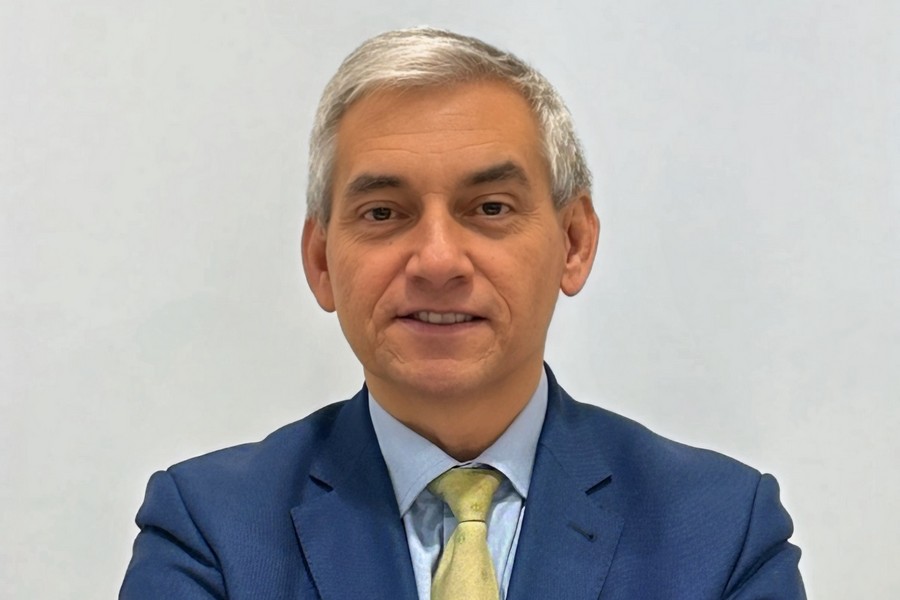
Chair of Association of Financiers of Kazakhstan Yelena BAKHMUTOVA:
WE EXPECT A SURGE IN INFLATION IN EARLY 2026 DUE TO TAX REFORM, BUT IT WILL BE ABSORBED BY YEAR-END


The outgoing year of 2025 was marked by unfavorable conditions in Kazakhstan’s financial market, including accelerating inflation, persistently high borrowing costs, and volatility in the national currency. At the same time, the market remained active: work was underway on a new systemic law, new financial institutions and products were launched, and a number of transactions were completed. In an interview with Interfax-Kazakhstan, Yelena BAKHMUTOVA, Chair of the Association of Financiers of Kazakhstan, spoke about expectations for the 2026 financial year and the challenges and opportunities it may bring for market participants and the public.


- Yelena Leonidovna, what were the key factors, in your opinion, influencing Kazakhstan’s financial sector in 2025? Which important developments are likely to occur in 2026?

- Kazakhstan’s financial market has been developing primarily within the broader economic and macroeconomic environment, as well as regulatory policy. Overall, economic conditions in 2025 were fairly favorable, as were expectations. According to current estimates, Kazakhstan’s gross domestic product grew by 6.4%.

From a macroeconomic perspective, the financial sector operated under what the National Bank described as a moderately tight monetary policy. This was driven by persistently high inflation and, as a result, a high base rate, which directly affected funding costs and the availability of market-based lending.

The regulatory environment was also quite stringent. In addition to elevated inflation, the National Bank significantly increased minimum reserve requirements for banks, resulting in a substantial withdrawal of excess liquidity from the banking system. At the first stage, this amounted to 2.2 trillion tenge, according to the National Bank. Following the completion of all three stages, the total volume is expected to reach 3.9 trillion tenge.

In addition, substantial regulatory measures were introduced in the area of behavioral supervision, as well as to cool consumer lending.

These factors defined the operating conditions in 2025. By the end of the year, we can see that they have somewhat slowed lending growth, although it remains relatively strong. Business lending, measured on an October-to-October basis, still grew by 13.7%, with the main contribution coming from large and small business segments.

At the same time, banks believe that the rather unfavorable macroeconomic environment, combined with regulatory tightening, will lead to a slowdown in lending growth in both the corporate and retail segments.


- In 2025, the number of banks in Kazakhstan increased after two major microfinance organizations received banking licenses. It may be too early to assess the impact, but how do you view this development, particularly in terms of business lending?

- The transformation of the two microfinance organizations (MFO) into second-tier banks was largely expected, as the relevant legislative framework had been in place for some time. However, this process required the development of supporting regulations, and the MFOs themselves had to undertake significant work, including transforming into joint-stock companies, obtaining banking status, and establishing full-fledged risk management systems.

The new banks are not yet major players. KMF Bank currently ranks 18th in the banking sector by assets, while BNK Commercial Bank ranks 23rd. Both institutions are focused primarily on business lending.

Naturally, the entry of these two banks has not led to a noticeable increase in overall lending volumes. Nevertheless, the trend itself can be viewed positively, as Kazakhstan has not seen an increase in the number of banks for quite some time.

It is quite possible that, in the near future, small regional banks could emerge from microfinance organizations, focusing on a more streamlined operating model and primarily serving the small and medium-sized enterprise segment.

At the same time, there have been other notable developments in the banking sector, including mergers, acquisitions, and corporate transformations. This indicates that the sector remains dynamic and continues to attract interest.

Moreover, if we look at private investment data, the financial sector—particularly banking and insurance—ranks first in terms of investment volumes.


- Inflation reached double-digit levels in 2025, Tenge weakened to historic lows, and the base rate rose to 18% for the first time since 1999. According to the National Bank’s forecasts, the rate will not be lowered in the first half of 2026. Do you expect Kazakhstan’s economy to improve in 2026, and under what conditions?

- Indeed, inflation rose to double-digit levels, prompting a two-stage increase in the base rate to what can be described as an exceptionally high level of 18%. According to the National Bank’s latest estimates, current inflation stands at 12.4%, which is fully in line with its earlier forecast range of 11%–13% for 2025.

For 2026, the National Bank expects inflation in the range of 9.5%–12.5%, while the government projects 9%–11%. In our view, inflation will fall within this corridor. Market expectations are currently closer to the National Bank’s forecast. Given this level of inflation and the factors that will influence the economy next year, it would be unreasonable to expect a decline in inflation in the first half of 2026. However, a gradual slowdown is possible toward the end of the year, along with a reduction in inflation expectations. If this scenario materializes, the base rate could be lowered to around 16.5% by year-end, according to our estimates.

At the same time, a short-term acceleration in inflation is expected at the beginning of next year due to ongoing tax and budget reform, primarily the increase in value-added tax from 12% to 16%. We believe, however, that this inflationary effect will be absorbed by the end of 2026.

Overall, tax and budget reform will have a significant impact on the economic environment next year, particularly on GDP growth.

Another important, indirect factor is the continuation of a moderately tight monetary policy, which keeps funding costs extremely high. Market-based lending will effectively face prohibitively high interest rates. As a result, lending activity will increasingly rely on the quasi-public sector. According to the 2026 budget, fiscal stimulus will significantly expand, and lending growth is therefore expected to be supported primarily by budgetary and quasi-public sources.

The external environment is also likely to be less favorable. A potential decline in global prices for energy resources and Kazakhstan’s key export commodities, combined with strong fiscal stimulus and increased imports related to investment projects, could put pressure on the trade balance and, consequently, on the Tenge exchange rate.

While the budget assumes an average exchange rate of around 540 tenge per US dollar, our experts believe that by the end of the year Tenge could weaken to approximately 550 per US dollar.


- Tenge has strengthened by the end of the current year. Some financial experts attributed this to increased demand from foreign investors for Kazakhstan’s government securities and warned of potential risks if investors exit when conditions change. Do you think financial regulators and the government will monitor this to prevent a negative scenario?

- Foreign investors likely played a role, but they were not the key factor behind the strengthening of the national currency. According to the National Bank, non-resident investments increased by 500 billion tenge in October.

The main factor [behind Tenge strengthening] was the high base rate. Traditionally, the exchange rate is also influenced by the trade balance and the balance of payments. While the National Bank does not set the exchange rate and does not engage in direct market intervention, significant foreign currency sales from the National Fund to replenish the budget have a noticeable impact on the domestic foreign exchange market.

According to official data from the National Bank, since the beginning of the year it has sold $13.9 billion on the market to finance budget transfers and sterilize foreign exchange proceeds from gold sales.

Apart from the usual seasonal volatility in December, no significant exchange rate movements are expected before the end of the year.

Looking ahead to next year, it is important to note that transfers from the National Fund to the national budget will be significantly reduced. No special transfer is planned, and total transfers will be limited to 2.8 trillion tenge.

We do not expect a significant reduction in the National Bank’s foreign exchange sales next year. Based on current trade balance estimates, no sharp changes in the exchange rate of the national currency are anticipated, assuming there are no new external shocks.


- The new law provides for the creation of so-called “Islamic windows” in universal banks. Is there demand for such services at present? In addition, Otbasy Bank Chair Lyazzat Ibragimova recently said that Kazakhstan needs to launch Islamic mortgages as soon as possible. How could such products affect the mortgage market?

- Kazakhstan already has Islamic banks. However, under current legislation, they are required to operate as standalone institutions.

The regulator is now proposing a new provision in the draft law—which we expect to be adopted by the end of the year and to come into force next year—allowing universal banks to open Islamic windows, provided they maintain separate accounting and comply with a number of additional regulatory requirements.


- Why was the provision on Islamic mortgages deleted from the draft banking law?

- With regard to Otbasy Bank, which is a development institution and, at the same time, a second-tier bank operating within the housing construction savings system, the introduction of Islamic mortgage products through an Islamic window would require amendments to several legislative acts governing Otbasy Bank’s activities.

If these amendments are not incorporated into the new banking law, the prospect of launching Islamic mortgages through Otbasy Bank will most likely be revisited at the first opportunity next year.


- How strong is demand for such products, and would opening Islamic windows be profitable for banks?

- This is largely a matter of strategic choice. At the very least, when the draft law was discussed with market participants, the provision on Islamic windows received support.

Another question is which banks will be prepared to adjust their internal structure. That will ultimately depend on demand for these products. Given Kazakhstan’s traditions, I believe there is demand for Islamic financial instruments.


- This year, there has also been discussion about developing and expanding housing construction savings instruments and scaling this model to universal banks. How realistic do you think it is?

- According to current statistics, only about one-third of Kazakhstan’s mortgage market is market-based. The remaining 67% consists of subsidized mortgages, either through Otbasy Bank programs or other state-supported schemes implemented by second-tier banks.

Naturally, when two-thirds of the market is made up of subsidized programs, this points to structural problems. In addition to the high cost of funding, there is a shortage of long-term funding sources and underdeveloped securitization mechanisms, which significantly constrain the supply of market-based mortgages.

Under these conditions, allowing universal banks to offer housing construction savings products under a separate license—without the need to spin off this business into a standalone bank—appears to be a realistic option.

At the same time, it is important to note that the new banking law provides for the strengthening of behavioral oversight starting in 2026.

The regulator will be empowered to assess new banking products in terms of their potential impact on consumers and, if acceptable risk thresholds are exceeded, to prohibit their issuance. New housing construction savings products will also be subject to this behavioral oversight filter.


- How would you assess the digitalization of Kazakhstan’s banking sector in 2026, in particular the introduction of a unified QR code and the launch of crypto cards?

- Following the adoption of the new banking law and related amendments to a number of other legislative acts, the financial market in 2026 will undergo significant changes linked to the expansion of digital assets, primarily digital financial assets. These developments will affect virtually all segments of the financial system, including securities market infrastructure—exchanges, central depositories—as well as issuers and investors.

Broad legalization of the circulation of unsecured digital assets, including cryptocurrencies, is expected beyond the jurisdiction of the Astana International Financial Centre (AIFC). The National Bank will regulate this activity as a separate line of business, with crypto exchanges operating under a licensing regime.

The new law will also broaden banks’ ability to participate in the capital of other organizations, which should significantly enhance their digitalization potential and allow them to offer additional services to clients.

The issuance of crypto cards is already being tested within the National Bank’s regulatory sandbox and is expected to gradually enter the mass market. Banks already have positive experience working with crypto exchanges and other market participants within the AIFC framework, which creates the necessary conditions for their smooth integration into the traditional financial system.

As for digitalization more broadly, Kazakhstan’s banking sector has achieved substantial progress. Not all banks have yet fully joined the unified QR code project, largely because it is necessary to take into account the interests of all market participants who have already made significant investments in digital solutions for both individuals and businesses, as well as to ensure an appropriate level of service quality and consumer security within the unified system.


- Kazakhstan’s residents are gradually losing the ability to withdraw excess pension savings. This year, withdrawals for eye treatment, dental services and plastic surgery were prohibited. Do you think the early use of pension surpluses could be banned altogether in the near future?

- The primary purpose of withdrawing excess pension savings has always been housing acquisition. In addition, funds may be used to pay for treatment of orphan and other complex diseases. I believe these options will remain.

At the same time, in my view, citizens should clearly understand that pension savings are intended to support people after retirement. With this priority in mind, the methodology for calculating so-called “excess” pension savings available for alternative use will likely be refined.


- What would you like to wish our readers for the coming year of 2026?

- I would like to wish all readers a stable and predictable world. Today, it has become commonplace to begin conferences by saying that we live in an era of global uncertainty. I would like to see more certainty and confidence.

Despite the difficult geopolitical environment, ongoing tax and budget reform, and a tight monetary policy, the government, together with the National Bank and the Agency for Regulation and Development of the Financial Market, has adopted a Joint Action Program aimed at stabilizing inflation and improving public welfare.

This is already a positive development. Coordinated actions indicate that we are moving in a clear and consistent direction.

At the same time, it is crucial to preserve partnership between the government, quasi-public institutions and the financial sector, so that every Tenge invested from the budget is matched by private investment and directed only to projects that create jobs and ensure high-quality economic growth.


- Thank you for your time!


December, 2025
© 2025 Interfax-Kazakhstan news agency
Copying and use of these materials without reference to the source is prohibited


Archive

Error message here!

Show Error message here!

Close